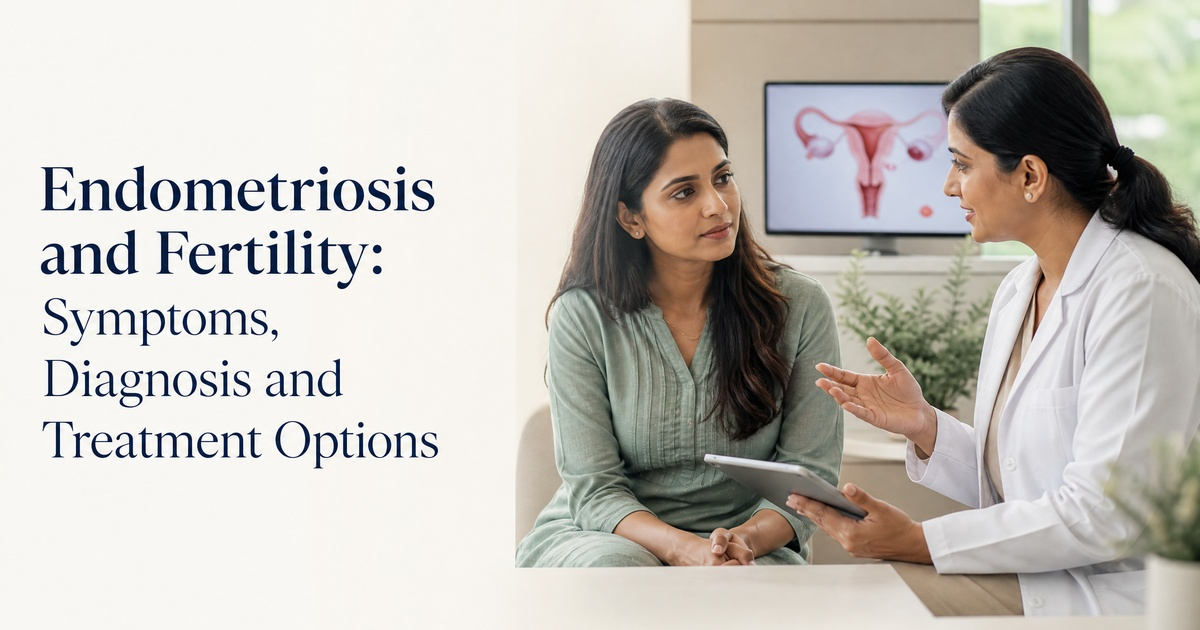
If you have endometriosis — or suspect you might — one question often overshadows the rest: will this affect my chances of having a baby? It is a fair worry, and the honest answer is reassuring and realistic at the same time. Endometriosis can make conceiving harder for some women, but it does not mean infertility for everyone. Understanding how endometriosis and fertility are connected helps you make calmer, better-informed decisions. This guide covers the symptoms, how the condition is diagnosed, the ways it can influence fertility, and the treatment options available.
What is endometriosis?
Endometriosis is a chronic condition in which tissue similar to the lining of the uterus grows outside the uterus — commonly on the ovaries, the pelvic lining (peritoneum), and, in some cases, deeper structures. This tissue responds to hormonal changes across the menstrual cycle, which can drive inflammation, scarring and pain. It is common, and it often takes years to diagnose because its symptoms overlap with “normal” period pain.
Common symptoms
Endometriosis looks different from one person to another. Some women have severe symptoms with minimal disease; others have extensive disease with few symptoms. Typical features include :
- Painful periods (dysmenorrhoea) that interfere with daily life
- Chronic pelvic pain, sometimes outside of periods
- Pain during or after sex (dyspareunia)
- Painful bowel or bladder symptoms, often worse around menstruation
- Heavy menstrual bleeding
- Fatigue
- Difficulty conceiving, which is sometimes the first sign
Importantly, some women have no obvious symptoms and only discover endometriosis during fertility investigations.
How can endometriosis affect fertility?
Endometriosis can influence fertility through several overlapping mechanisms, and the impact varies with the location and severity of disease :
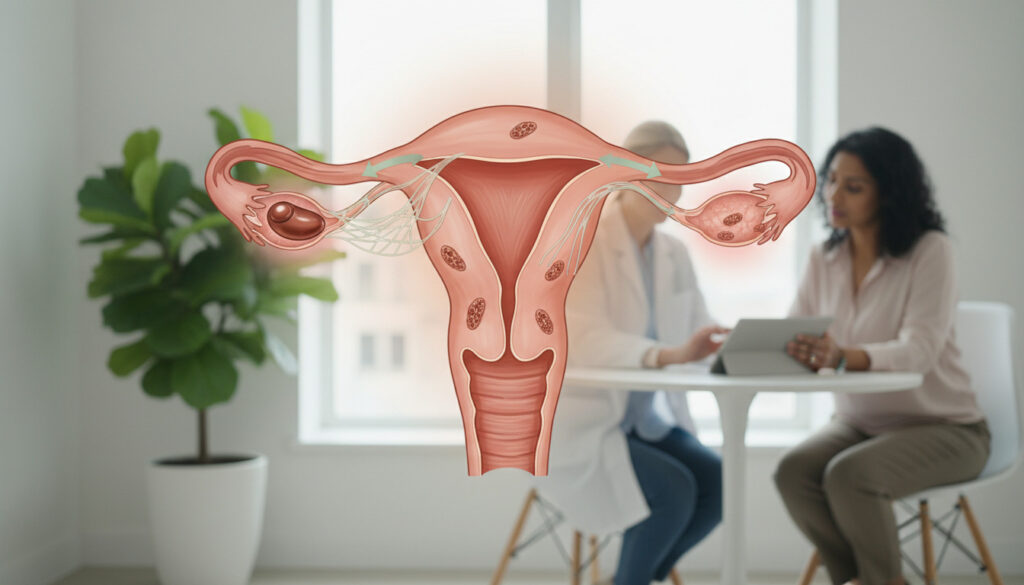
- Distorted pelvic anatomy. Adhesions (internal scar tissue) can alter the position of the ovaries and fallopian tubes, making it harder for an egg to be picked up and fertilised.
- Ovarian involvement. Cysts called endometriomas can affect the ovaries, and both the disease and surgery to treat it may influence ovarian reserve (the pool of remaining eggs).
- Inflammation. A more inflammatory pelvic environment may affect egg quality, sperm function, fertilisation and early embryo development.
- Implantation. There is ongoing research into whether endometriosis affects how readily an embryo implants.
Here is the key balance to hold: these mechanisms explain why some women with endometriosis take longer to conceive or need help — but many women with endometriosis conceive naturally. A diagnosis is information to act on, not a verdict.
| Symptom | Why it happens | Why it matters for fertility |
|---|---|---|
| Painful periods | Inflammation from endometrial-like tissue | A prompt to investigate earlier rather than later |
| Pain during sex | Deep or pelvic disease | May affect frequency of intercourse and signals deeper disease |
| Ovarian cyst (endometrioma) | Endometriosis on the ovary | Can affect ovarian reserve and surgical planning |
| Difficulty conceiving | Adhesions, inflammation, ovarian effects | The reason many women are diagnosed during fertility work-up |
How is endometriosis diagnosed?
Diagnosis has changed in recent years. Clinicians now place more weight on symptoms and imaging, and less on routine surgery :
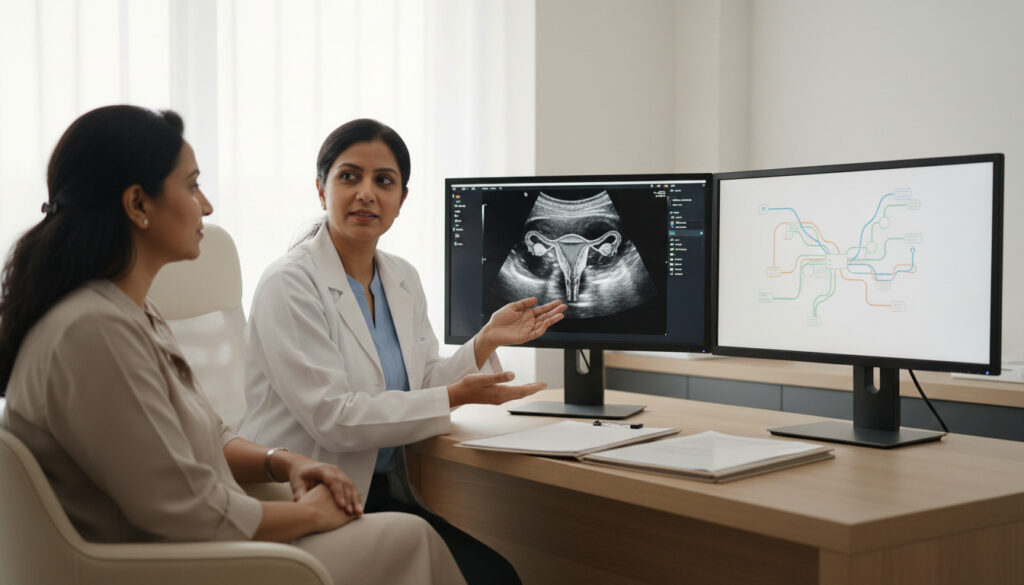
- Clinical assessment. A careful history of pain and cycle symptoms is a strong starting point.
- Transvaginal ultrasound. This can detect ovarian endometriomas and signs of deeper disease and is often the first-line scan.
- MRI. Useful for mapping deep or complex disease before surgery.
- Laparoscopy. Keyhole surgery was traditionally considered the definitive way to confirm endometriosis. Current specialist guidance no longer treats it as essential for diagnosis — importantly, a normal scan does not rule endometriosis out, and treatment can sometimes begin based on symptoms.
If you are trying to conceive, your evaluation may also include an assessment of ovarian reserve (such as an AMH blood test) and, where relevant, checks of the fallopian tubes and your partner’s sperm, because fertility is rarely about one factor alone.
Treatment options: pain relief and fertility are not the same
This is the most misunderstood part of the topic. The treatments that best control endometriosis pain are usually not the treatments that help you conceive — and some actively prevent pregnancy while you take them.
Managing pain (when not trying to conceive)
Hormonal treatments — such as combined hormonal contraception, progestogens, or other suppressive therapies — can reduce pain by calming the hormonal cycle that feeds endometriosis. These are valuable for symptom control but are contraceptive, so they are not used to improve fertility.
Supporting fertility (when trying to conceive)
When the goal is pregnancy, the approach is different and is tailored to you :
- Expectant (natural) conception. For many women, especially with milder disease and good ovarian reserve, trying naturally for a defined period is reasonable.
- Surgery. Operative laparoscopy to remove or treat endometriosis can be an option in selected cases, weighed carefully against its possible effect on ovarian reserve. After surgery, tools like the Endometriosis Fertility Index help estimate the chance of natural conception and guide counselling.
- Assisted reproduction. Options include intrauterine insemination (IUI), sometimes with ovarian stimulation, and in-vitro fertilisation (IVF). IVF is often effective, particularly when disease is more advanced, when there are other fertility factors, or when time matters because of age.
Notably, hormonal suppression is not recommended purely to boost natural pregnancy rates, and certain medicines are used only in specific contexts (for example, as part of ovulation induction) rather than as general fertility treatments.
Fertility preservation
If ovarian surgery is planned — particularly for endometriomas that could reduce ovarian reserve — or if disease is advanced and you are not ready to conceive, it is worth discussing fertility preservation (such as egg freezing) with a specialist before proceeding.
What factors shape the right plan?
Because there is no single “endometriosis fertility treatment,” decisions are individualised. The main factors your specialist will weigh include :
- Your age and ovarian reserve
- The stage and location of endometriosis
- Whether pain is a major problem
- Any previous surgery
- Other fertility factors, including sperm quality
- Your preferences and how long you have been trying
When should you seek fertility evaluation?
As a general guide, consider a fertility assessment if you have been trying to conceive for 12 months without success — or 6 months if you are 35 or older — and sooner if you already know you have endometriosis or have significant symptoms. Early advice keeps more options open, especially where ovarian reserve or age is a consideration.
The bottom line
Endometriosis and fertility are connected, but the relationship is far from fixed. Many women conceive naturally; others benefit from surgery or assisted reproduction; and pain management, while important, is a separate track from fertility care. A specialist can assess your individual situation, explain your ovarian reserve and disease picture, and build a plan around your goals.
FAQs :
Q1. Can endometriosis affect fertility?
Yes, it can — through adhesions, ovarian effects and inflammation — but it does not cause infertility in everyone. Many women with endometriosis conceive, some without any assistance.
Q2. Can you get pregnant naturally with endometriosis?
Often, yes, particularly with milder disease and healthy ovarian reserve. If conception is taking longer than expected, a fertility assessment can clarify your options.
Q3. Does endometriosis surgery improve fertility?
It can help in selected cases, but surgery also carries a possible impact on ovarian reserve. The decision depends on your age, symptoms, disease and prior treatment, and should be made with a specialist.
Q4. Is IVF recommended for endometriosis?
IVF is a well-established option, especially with more advanced disease, other fertility factors, or when age makes time important. Whether it is right for you depends on your individual assessment.
Q5. Do hormonal treatments for endometriosis help me conceive?
No. Hormonal suppression manages pain but is contraceptive and is not used to improve natural fertility. Fertility care follows a different pathway.
Q6. How is endometriosis diagnosed today?
Through clinical assessment and imaging (transvaginal ultrasound, sometimes MRI). Laparoscopy is no longer considered essential for diagnosis, and a normal scan does not fully rule it out.
Q7. When should I see a specialist about fertility?
After 12 months of trying (or 6 months if you are 35+), or sooner if you have known endometriosis or significant symptoms.
Conclusion
Endometriosis can make conception harder for some women, but it is not a barrier for everyone — and there is a clear, evidence-based menu of options, from natural conception to surgery and assisted reproduction. The most useful step is a personalised assessment that looks at your disease, your ovarian reserve and your goals, so your plan fits you rather than a diagnosis label.
Medical Disclaimer
This article is for general education only and is not medical advice, diagnosis or treatment. It is not a substitute for consultation with a qualified gynaecologist or fertility specialist. Individual circumstances vary; please seek personalised care for decisions about diagnosis, surgery or fertility treatment.