

Every cell in the human body needs energy to function properly. From brain activity and hormone production to muscle movement and metabolism, energy drives nearly every biological process. At the center of this energy system lies a tiny but powerful structure inside our cells called mitochondria.
Often referred to as the “powerhouse of the cell,” mitochondria are responsible for producing adenosine triphosphate (ATP)—the molecule that fuels almost all cellular activities. Without healthy mitochondria, our bodies cannot efficiently generate the energy required for normal physiological functions.
In recent years, scientific research has revealed that mitochondrial health is closely connected to metabolism, aging, immune health, fertility, and hormonal balance. For women especially, mitochondrial function plays an important role in reproductive health, pregnancy outcomes, and overall hormonal wellness.
Understanding mitochondrial health can therefore offer valuable insights into preventive healthcare and long-term well-being.
What Exactly Do Mitochondria Do?
Mitochondria perform several critical functions beyond simply generating energy.

1. Cellular Energy Production
The most important function of mitochondria is to produce ATP through a process called oxidative phosphorylation. This energy is essential for:
- Muscle contractions
- Brain function
- Hormone synthesis
- Cellular repair and regeneration
- Metabolic processes
When mitochondrial energy production declines, people may experience symptoms such as fatigue, reduced stamina, and poor cellular performance.
2. Regulation of Cellular Metabolism
Mitochondria play a vital role in metabolism, helping the body convert nutrients like carbohydrates, fats, and proteins into usable energy.
Healthy mitochondrial activity ensures:
- Efficient metabolism
- Stable blood sugar levels
- Proper nutrient utilization
3. Hormone Production and Regulation
Many hormones are synthesized with the involvement of mitochondria. This means mitochondrial health has a direct impact on hormonal balance, which is especially significant for women’s health.
Hormonal systems influenced by mitochondrial function include:
- Estrogen production
- Progesterone regulation
- Thyroid hormone activity
- Stress hormone response
4. Cell Protection and Detoxification
Mitochondria also help regulate oxidative stress, a process that can damage cells when excessive free radicals accumulate.
Healthy mitochondria support:
- Cellular detoxification
- Protection against oxidative damage
- Immune system function

Mitochondrial Health and Women’s Wellness
While mitochondrial health affects everyone, it has particular significance for women’s reproductive and hormonal health.
1. Mitochondria and Fertility
Egg cells contain some of the highest concentrations of mitochondria in the human body. This is because developing embryos require large amounts of energy during early stages of growth.
Healthy mitochondrial function supports:
- Egg quality
- Embryo development
- Successful fertilization
- Healthy pregnancy outcomes
Studies suggest that poor mitochondrial function may contribute to reduced fertility and reproductive challenges.
2. Mitochondria and Hormonal Balance
Hormonal imbalances often stem from disruptions in cellular energy production and metabolism.
When mitochondrial function is compromised, it may affect:
- Estrogen metabolism
- Progesterone production
- Insulin sensitivity
This imbalance may contribute to conditions such as:
- Polycystic Ovary Syndrome (PCOS)
- Menstrual irregularities
- Metabolic syndrome
Supporting mitochondrial health may therefore play an indirect role in maintaining healthy hormonal cycles.
3. Mitochondria and Pregnancy Health
During pregnancy, the body undergoes intense metabolic changes. The developing fetus requires significant energy supply for proper growth.
Healthy mitochondrial function supports:
- Placental health
- Nutrient transport to the fetus
- Maternal metabolic balance
Maintaining mitochondrial health may help support healthy pregnancy outcomes and maternal well-being.
Signs of Mitochondrial Dysfunction
When mitochondria fail to function optimally, the body may experience reduced energy production and increased oxidative stress.

Common mitochondrial dysfunction symptoms may include:
- Chronic fatigue
- Brain fog or reduced concentration
- Muscle weakness
- Hormonal imbalances
- Reduced metabolic efficiency
- Poor recovery from physical activity
While these symptoms can have many causes, mitochondrial health is increasingly recognized as an important factor in overall metabolic and cellular wellness.
What Causes Mitochondrial Dysfunction?
Several lifestyle and environmental factors can impair mitochondrial function over time.
1. Poor Nutrition
Diets lacking essential vitamins, minerals, and antioxidants may reduce the efficiency of mitochondrial energy production.
Nutrients important for mitochondrial function include:
- B vitamins
- Coenzyme Q10
- Magnesium
- Omega-3 fatty acids
2. Oxidative Stress
Excess free radicals can damage mitochondrial membranes and impair ATP production.
Sources of oxidative stress include:
- Pollution
- Smoking
- Processed foods
- Chronic inflammation
3. Sedentary Lifestyle
Physical activity stimulates the production of new mitochondria through a process known as mitochondrial biogenesis.
Lack of exercise may reduce mitochondrial efficiency and metabolic performance.
4. Aging
As we age, mitochondrial function naturally declines. This can contribute to:
- Reduced energy levels
- Slower metabolism
- Increased susceptibility to metabolic disorders
Supporting mitochondrial health through lifestyle interventions may help maintain cellular vitality during aging.
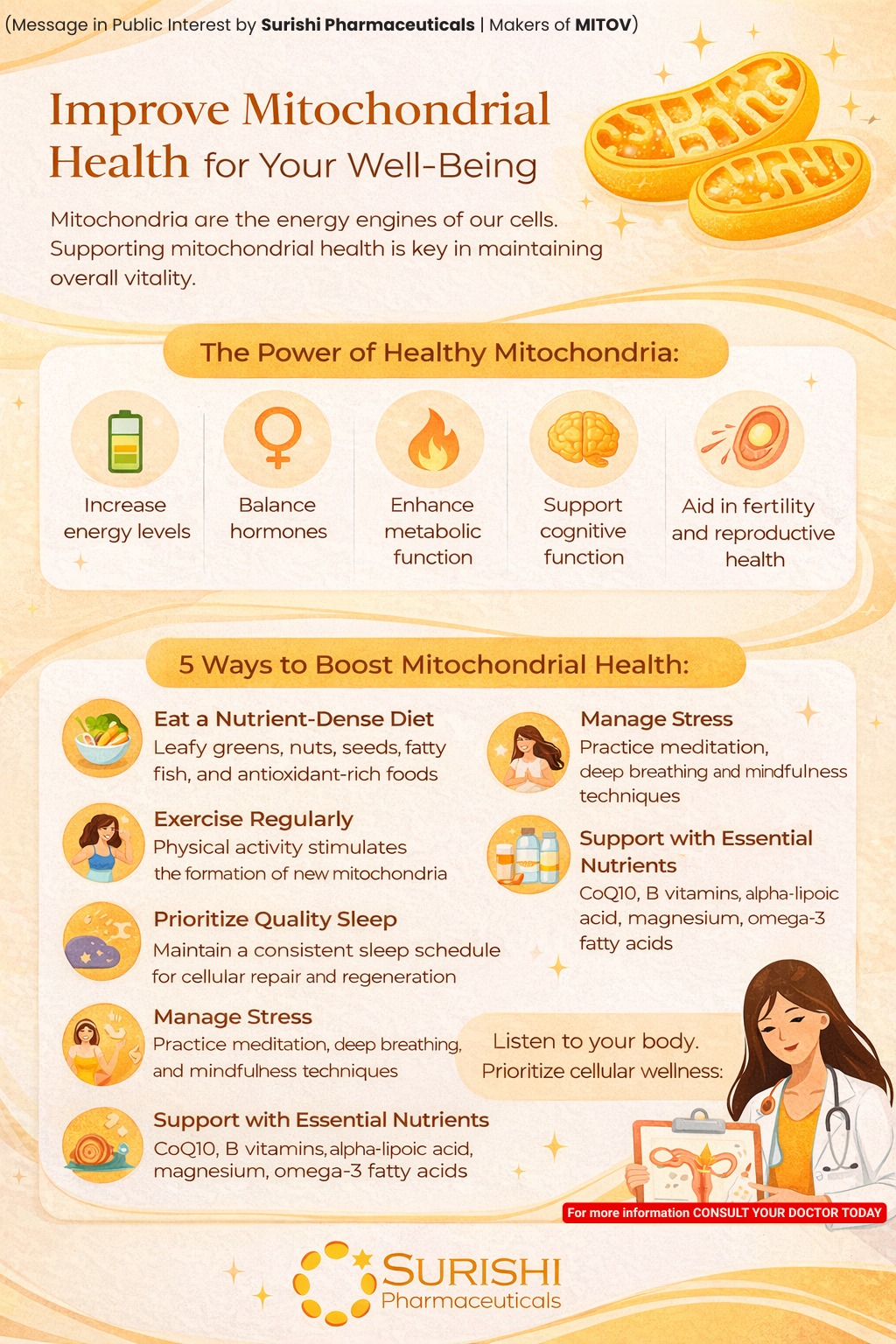
How to Improve Mitochondrial Health Naturally
Supporting mitochondrial health does not always require complex interventions. Simple lifestyle practices can significantly improve mitochondrial function.
1. Eat a Nutrient-Dense Diet
A balanced diet rich in whole foods provides the essential nutrients required for optimal mitochondrial function.
Foods that support mitochondrial health include:
- Leafy green vegetables
- Nuts and seeds
- Healthy fats such as olive oil
- Fatty fish rich in omega-3 fatty acids
- Whole grains
Antioxidant-rich foods help reduce oxidative stress and protect mitochondrial structures.
2. Exercise Regularly
Physical activity stimulates the formation of new mitochondria and improves cellular energy production.
Recommended activities include:
- Brisk walking
- Strength training
- Yoga
- Aerobic exercise
Even moderate exercise can improve mitochondrial efficiency and overall metabolic health.
3. Prioritize Quality Sleep
Sleep is essential for cellular repair and mitochondrial regeneration.
Poor sleep may contribute to:
- Hormonal disruption
- Reduced cellular energy
- Increased oxidative stress
Maintaining a consistent sleep schedule can help support mitochondrial recovery.
4. Manage Stress
Chronic stress increases cortisol levels, which may negatively impact mitochondrial health.
Stress-management practices that support cellular health include:
- Meditation
- Deep breathing exercises
- Mindfulness practices
- Relaxation techniques
5. Support with Essential Nutrients
Certain nutrients and compounds are known to support mitochondrial function.
These may include:
- Coenzyme Q10
- Alpha-lipoic acid
- B-complex vitamins
- Magnesium
- L-carnitine
These nutrients help support cellular energy production and antioxidant defense mechanisms.

The Future of Healthcare: Focusing on Cellular Health
Modern healthcare is increasingly shifting toward preventive and cellular-level health strategies.
Rather than focusing only on treating symptoms, many health professionals now emphasize supporting cellular function and metabolic health.
Mitochondria lie at the center of this emerging approach.
By maintaining healthy mitochondrial activity, individuals may support:
- Energy metabolism
- Hormonal balance
- Reproductive health
- Healthy aging
This growing understanding of mitochondrial health highlights the importance of nutrition, lifestyle, and preventive wellness strategies.
Why Mitochondrial Health Matters More Than Ever
In today’s fast-paced lifestyle, many people experience fatigue, metabolic stress, and hormonal imbalance.
While these issues often appear unrelated, they may share a common underlying factor: cellular energy imbalance.
Supporting mitochondrial health can therefore play a key role in maintaining:
- Physical vitality
- Mental clarity
- Metabolic efficiency
- Hormonal stability
By adopting healthy lifestyle habits and focusing on cellular wellness, individuals can take proactive steps toward long-term health and well-being.
Conclusion
Mitochondria are far more than simple cellular structures—they are the energy engines that power nearly every function in the human body.
From energy production and metabolism to fertility and hormonal balance, mitochondrial health plays a central role in maintaining overall wellness.
As scientific research continues to reveal the importance of cellular energy systems, supporting mitochondrial health through balanced nutrition, regular exercise, stress management, and essential nutrients becomes increasingly important.
Focusing on mitochondrial wellness offers a powerful approach to preventive healthcare and sustainable vitality.
(Message in Public Interest by Surishi Academic Council | Makers of MITOV)