Summary
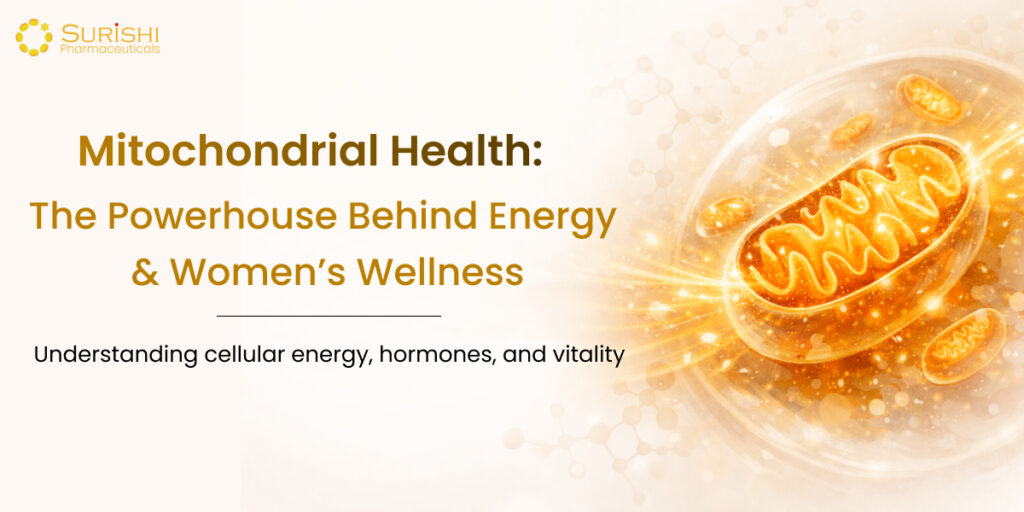
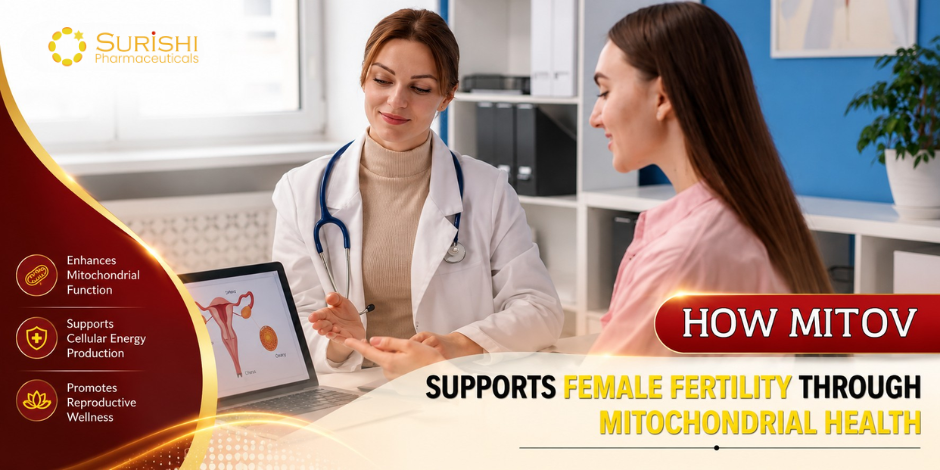
When women struggle with infertility, the conversation often focuses on hormones, fallopian tubes, or uterine health, but rarely on what is happening inside the cell itself. Mitochondrial health is one of the most critical and most overlooked determinants of female fertility, governing everything from egg maturation to embryo implantation. MITOV supports women’s reproductive health from the inside out. Understanding how MITOV works means understanding how the cell itself powers conception.
Introduction
If you’ve been trying to conceive without success, you may have already completed the standard fertility workup (blood tests, hormone panels, and ultrasounds) and been told that everything appears to be within the normal range. Yet the difficulty persists.
This frustrating reality is increasingly familiar to women across India, and modern reproductive science is beginning to explain why: the problem may not be what conventional testing measures but what it misses entirely.
At the centre of this gap is mitochondrial health. The mitochondria are the energy-generating organelles in every cell, responsible for producing ATP (adenosine triphosphate), which powers virtually every biological process.
In the context of female fertility, their role is especially profound. Human oocytes, the eggs that must mature, fertilise, and develop into viable embryos, contain more mitochondria than almost any other cell type in the body.
The process of conception demands enormous cellular energy, and every step of it depends on mitochondrial output. This scientific understanding forms the foundation for innovative Surishi Pharma products that support reproductive health through advanced cellular and mitochondrial optimisation.
When mitochondrial function falters, it compromises the energy supply. Eggs fail to mature correctly. Fertilisation rates drop. Early embryo development stalls. Implantation does not occur.
These outcomes are not random; they are the predictable result of a cellular energy deficit that is measurable, addressable, and increasingly understood by reproductive medicine worldwide.
MITOV by Surishi Pharmaceuticals is formulated precisely to address this deficit. Rather than targeting fertility symptoms in isolation, MITOV restores mitochondrial function that underpins every stage of the reproductive process, offering Indian women a cellular approach to fertility support that is both scientifically grounded and clinically relevant.
How Each Ingredient in MITOV Supports the Fertility Process
NMN is the core endogenous synthetic precursor of NAD+ in the human body. Oocytes rely on NAD+ to perform three core physiological functions. The decline in NAD+ levels triggered by aging can induce three categories of pathological conditions, and this lays a solid foundation for subsequent research.
1. NMN and the NAD+ Pathway
NMN is the synthetic precursor of the core molecule nicotinamide adenine dinucleotide (NAD+). NAD+ powers oocyte mitochondria, supports DNA repair, and regulates sirtuin proteins to maintain chromosomal integrity; a decline in NAD+ levels can trigger mitochondrial damage and embryonic chromosomal abnormalities.
The supplement MITOV can supply NMN to raise NAD+ levels in the human body and targets the upstream root causes of reproductive decline. Emerging clinical data show that women who take NMN experience a significantly increased fertilisation rate, which is fully consistent with the preclinical conclusion that NMN can restore oocyte function.
2. CoQ10 and Mitochondrial Energy Production
Coenzyme Q10 is the core active electron carrier in the mitochondrial respiratory chain. It not only supports ATP synthesis, which drives oocyte maturation but also alleviates the age-related decline in oocyte quality.
CoQ10 supplementation for women with diminished ovarian reserve undergoing in vitro fertilization treatment can improve their mitochondrial function, as well as increase the average number of oocytes retrieved and the number of mature oocytes.
The MITOV reproductive formula, supplemented with CoQ10, has been scientifically validated, is suitable for all women preparing for pregnancy, and applies to both natural and assisted conception.
3. Astaxanthin and Oxidative Stress Reduction
Reactive oxygen species (ROS) that accumulate inside cells damage oocytes and increase the risk of three types of adverse pregnancy outcomes. Astaxanthin is a potent natural antioxidant that can neutralize reactive oxygen species within the mitochondrial membrane; when incorporated into MITOV preparations, it can also supply energy to oocytes and provide cellular protection.
4. EGCG (Epigallocatechin Gallate)
EGCG, the core extract of green tea, can alleviate oxidative damage across three scenarios and protect mitochondria. The three scenarios include the demands of a normal menstrual cycle, PCOS-related metabolic stress, and age-related cellular changes.
When paired with NMN and CoQ10, which provide energy to support repair, and the antioxidant Astaxanthin, the combination supplement MITOV leverages synergy among its multiple ingredients to deliver comprehensive mitochondrial fertility support, rather than adopting a narrow, limited focus.
The Fertility Journey Stages MITOV Supports
What makes MITOV’s approach particularly valuable is that mitochondrial health is relevant not at a single point in the fertility journey, but at every stage.
1. Pre-Conception and Natural Conception:
The authors of this paper propose that women planning to conceive naturally can undergo mitochondrial optimization interventions several months before ovulation in order to improve the quality of fertilizable oocytes within a single cycle.
In the field of reproductive physiology, it is widely recognized by the academic community that human dominant follicles take 90 days to mature, and stable mitochondrial support can improve the quality of preovulatory oocytes.
2. IVF and ART Preparation:
Mitochondrial health in women undergoing assisted reproduction influences core reproductive indicators and pregnancy outcomes. At present, clinical research on CoQ10 and NMN in this context is still continuously advancing.
3. PCOS and Hormonal Infertility:
Patients with PCOS present with a core, progressive chain of pathological changes: the body’s endogenous metabolic environment impairs mitochondrial function; insulin resistance exacerbates oxidative stress; inflammation disrupts the hormonal environment required for ovulation; and NAD⁺ depletion leads to an insufficient energy supply for oocytes.
MITOV moves beyond the traditional mindset that only frames PCOS as a simple hormonal disorder and delivers precise, targeted intervention to address all of these abnormalities.
4. Age-Related Fertility Decline:
A broad consensus has been reached in the global reproductive science community that the reproductive clock accelerates in women over the age of 35, and MITOV can targetedly improve NAD+ depletion and mitochondrial decline in this population.
Conclusion
The scientific community in the reproductive health field has reached a broad consensus that mitochondrial efficiency and cellular energy production are core factors impacting oocyte quality and reproductive health.
MITOV, a fertility-support product developed by Surishi Pharmaceuticals for the Indian market, operates through three core dimensions to improve reproductive health and enhance oocyte quality.
With continued innovation in Surishi Pharma products, it is strengthening its position as a science-driven healthcare brand. As a trusted Surishi Pharmaceuticals Delhi-based healthcare organization, with guidance from the Surishi Academic Council, it focuses on advanced fertility science. Products like the MITOV tablet India and the ASTA CoQ tablet India reflect its commitment to women’s wellness, reinforcing its role as a leading women’s healthcare pharma company in India.
FAQs
1. How does mitochondrial health directly affect a woman’s ability to conceive?
The number of mitochondria in human oocytes far exceeds that in the vast majority of somatic cells. Sufficient ATP supports the two core reproductive processes of oocyte maturation and fertilization. Three types of mitochondrial damage, including oxidative stress, can impair fertility, and mitochondrial repair can optimize the energy environment required for conception.
2. How long should women take MITOV before expecting to see results in fertility outcomes?
The maturation cycle of a dominant oocyte takes 90 days; therefore, mitochondrial support must be sustained for at least 3 months before its effects on egg quality are observed. Pre-IVF women should start mitochondrial support 60–90 days before retrieval. For tailored advice, consult your gynaecologist or reproductive expert.
3. Can MITOV be taken alongside standard fertility medications or IVF protocols?
The nutritional supplement MITOV, used alongside fertility treatment, has good overall tolerability. Patients currently in an active treatment cycle must report all supplements they are taking to their reproductive endocrinologist or fertility specialist, and strictly follow their doctor’s instructions.
(Message in Public Interest by Surishi Academic Council | Makers of MITOV)