
Deciding to have a baby often starts quietly — a conversation, a change of plans, a sense that the time is close. What many women aren’t told is that the months before conception matter as much as the pregnancy itself. The egg that will be released a few cycles from now is already maturing, the body’s nutrient stores are being drawn down or topped up, and the neural tube of a future baby closes within the first four weeks of pregnancy — often before a missed period is even noticed.
Preparing your body for pregnancy — what clinicians call preconception care — is simply the set of sensible, well-studied steps that give a future pregnancy a healthier starting point. None of it guarantees conception, and no food, supplement or routine can promise a baby. But the evidence is consistent that a handful of preparations genuinely improve the odds of a smoother pregnancy and a healthier outcome. Here is what actually matters, and what doesn’t.
What “preparing for pregnancy” really means
Preconception care is health optimisation before you conceive: reviewing your nutrition, weight, cycle, medicines and any existing health conditions so that you enter pregnancy in the best shape reasonably possible. Major health bodies suggest beginning this roughly three months before you start trying, though earlier is fine and even a few weeks of preparation is better than none.
The logic is timing. Eggs take several months to mature, early fetal development happens before most women know they’re pregnant, and habits like smoking or an unmanaged thyroid don’t switch off the moment a test turns positive. Preparing early means the groundwork is already laid when it counts.
Why preparation before conception matters
Three windows overlap in the preconception period. First, folate status must be adequate before conception, because the neural tube forms in the earliest weeks. Second, existing conditions — diabetes, thyroid disorders, high blood pressure, PCOS — are far easier and safer to stabilise before pregnancy than during it. Third, modifiable habits such as smoking, alcohol and weight take time to change. Addressing these in advance, rather than reactively, is the whole point of preconception care.
Nutrition before pregnancy
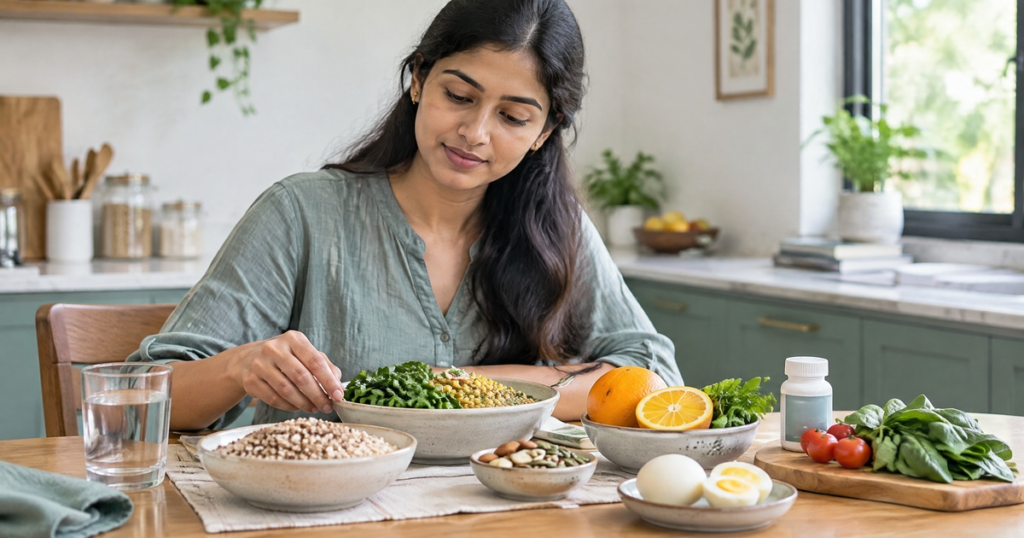
There is no single “fertility diet,” and any source promising one is overstating the evidence. What research supports is a broadly balanced, mostly whole-food eating pattern — the same pattern that supports general health. In an Indian context that translates comfortably into everyday food: dals and legumes, seasonal vegetables and fruit, whole grains like whole-wheat roti, millets (bajra, ragi, jowar), brown or hand-pounded rice, dairy or fortified alternatives, eggs, fish or lean meat where eaten, and nuts and seeds.
Aim for variety and colour rather than restriction. Protein at each meal supports steady energy and satiety; whole grains and fibre help with blood-sugar stability, which is particularly relevant for women with PCOS or insulin resistance. If your periods are irregular or you’ve been told you have PCOS, the eating principles in Surishi’s PCOS diet for Indian women guide are a useful companion here.
Folic acid: the one non-negotiable
If you do only one thing on this list, make it this. Public health bodies including the CDC recommend that anyone who could become pregnant take 400 micrograms (mcg) of folic acid daily, starting at least one month before conception and continuing through the first trimester. It is the single most evidence-backed preconception step, shown to substantially reduce the risk of neural tube defects such as spina bifida and anencephaly.
Folic acid is usually taken as a standalone supplement or within a prenatal/preconception multivitamin. Food folate — leafy greens, dals, citrus, fortified cereals — is valuable but not a reliable substitute for the supplement at this stage. Women at higher risk (for example, a previous pregnancy affected by a neural tube defect, or certain medical conditions) may be advised a much higher dose, but that is a decision for a doctor, not a self-started one.
The other nutrients worth knowing about
Beyond folate, a few nutrients deserve attention — deficiencies of several are common among Indian women:
- Iron. Entering pregnancy iron-deficient is common and worth correcting beforehand. Fatigue, breathlessness and pallor can be signs. Surishi’s overview of iron deficiency in women explains testing and prevention in detail.
- Vitamin D. Deficiency is widespread in India despite the sunshine. It’s linked to bone and general health, and correction is straightforward once identified by a blood test.
- Vitamin B12. Important for nerve and blood health, and often low in predominantly vegetarian diets. Worth checking if your intake of dairy, eggs or fortified foods is limited.
- Iodine and calcium. Both support pregnancy; iodised salt covers most iodine needs, and dairy or fortified foods cover calcium.
The sensible approach is a check-up and blood tests rather than guesswork, so any correction is targeted to what you actually need.
Vitamin D — correct a deficiency, don’t over-treat
Vitamin D deserves its own note because the advice is often muddled. The evidence-based position is simple: test, and correct a genuine deficiency under medical guidance. Whether high-dose vitamin D improves fertility in women who are not deficient is not well established, so it shouldn’t be taken in large amounts on assumption.
Where a blood test confirms deficiency, doctors correct it — sometimes with a high-dose regimen, sometimes with daily maintenance. Products such as Surishi’s Femisun D, a vitamin D3 formulation, exist for exactly this clinician-directed deficiency-correction context; the dose and duration are a medical decision, not something to self-administer as a routine “preconception vitamin.” For general reading on why vitamin D matters for women, Surishi’s bone health guide for women after 30 is a useful companion.
Hydration, weight and metabolic health
Hydration is basic but real — adequate water supports every system, and thirst is a reasonable guide in a hot climate. Weight matters more than many realise: both a higher and a very low BMI are associated with less regular ovulation and lower conception rates, and higher weight raises the risk of pregnancy complications such as gestational diabetes. The aim isn’t a number on a scale but metabolic steadiness — stable blood sugar, a moderate and achievable weight range, and, for women with insulin resistance or PCOS, attention to that specifically. Modest, sustainable changes achieved before pregnancy are far more useful than crash efforts.
Physical activity and sleep
Regular, moderate activity — brisk walking, cycling, swimming, yoga, strength work — supports weight, mood, insulin sensitivity and sleep, all of which feed into reproductive health. There’s no need for extremes; consistency beats intensity. Sleep is the quietly underrated pillar: poor or irregular sleep disrupts the hormones that regulate appetite, stress and the menstrual cycle. Protecting seven to nine hours where life allows is a genuine part of preparation.
Stress and mental wellbeing
Trying to conceive can be stressful, and unmanaged chronic stress isn’t good for anyone’s health. It’s worth being careful with the claims here, though: stress does not reliably “cause” infertility, and telling women to “just relax” is both unhelpful and unkind. What’s fair to say is that supporting your mental wellbeing — through rest, connection, movement, and professional help when needed — is worthwhile in its own right, and makes the process more bearable. If you take medication for a mental health condition, review it with your doctor before stopping or changing anything.
Smoking, alcohol, caffeine and other substances
The evidence here is clear on the first two. Smoking harms egg quality and fertility and is best stopped well before trying. For alcohol, there’s no established safe amount when trying to conceive or in pregnancy, so avoiding it is the cautious, mainstream recommendation. Recreational substances should be stopped, with medical support if needed.
Caffeine is more moderate: high intakes are best avoided, and a common precautionary ceiling is keeping caffeine to roughly a low-to-moderate level (around 200 mg a day — about two small cups of coffee) as women approach pregnancy. Chai, coffee and cola all contribute, so it’s the total that counts.
Review your medicines and supplements
Some prescription and over-the-counter medicines aren’t suitable in pregnancy, and a few need switching or adjusting before you conceive. Bring a full list — including herbal and traditional remedies and any supplements — to a preconception appointment. Never start or stop a prescribed medicine on your own; the point is a planned review, not self-adjustment.
Understanding your cycle and the fertile window
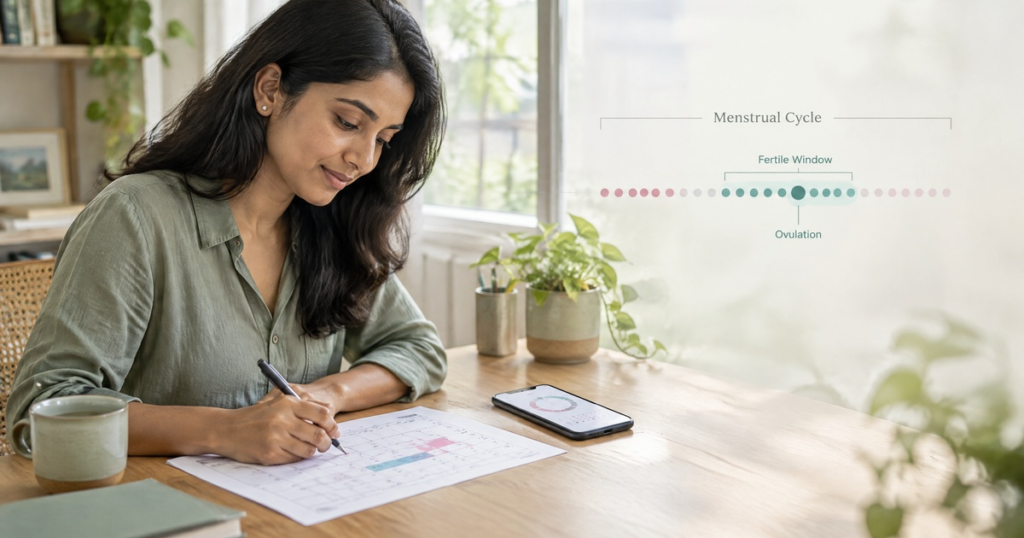
Cycle awareness is one of the most practical skills in preconception preparation. In a typical cycle, ovulation releases an egg that survives for around 12–24 hours, while sperm can survive in the reproductive tract for up to about five days. That creates a fertile window of roughly six days — the five days before ovulation and the day of ovulation itself. Timing intercourse across this window, rather than trying to pinpoint a single “perfect” day, gives the best natural chance.
Tracking cycle length, noticing changes in cervical mucus, or using ovulation predictor kits can help you learn your own pattern. If your cycles are irregular or unpredictable, ovulation is harder to time and may itself be worth investigating — Surishi’s guide to irregular periods and when to see a doctor is a good next read.
The preconception check-up
A visit to a gynaecologist or GP before trying is genuinely useful, not just a formality. A good preconception check-up typically reviews your medical and menstrual history, checks blood pressure and weight, screens for anaemia, thyroid function and blood sugar, confirms rubella immunity and other relevant vaccinations, and reviews your medicines. It’s also the moment to confirm your folic acid plan and raise any concerns. Vaccinations such as rubella (MMR) are best given before pregnancy, not during, so they belong in this pre-pregnancy window.
Chronic conditions to stabilise first
Several conditions are much safer managed before conception:
- Thyroid disorders — both under- and over-active thyroid can affect cycles and pregnancy, and levels are often adjusted before trying.
- Diabetes — good blood-sugar control before conception meaningfully lowers risks to the pregnancy.
- High blood pressure — some medicines need changing before pregnancy.
- PCOS — a common cause of irregular ovulation, and very manageable with the right support.
If you have any ongoing condition, a pre-pregnancy conversation with the treating doctor is the single most valuable step you can take.
PCOS and irregular periods
PCOS is one of the most common reasons Indian women face irregular cycles and difficulty conceiving — and importantly, it is not a closed door. Many women with PCOS conceive naturally, especially with weight, diet and ovulation support where needed. Surishi covers this in depth in PCOS and pregnancy: can you get pregnant naturally? For the specific question of inositol — an area with reasonable evidence for supporting ovulation and metabolic markers in PCOS — see myo-inositol for PCOS.
A word on fertility supplements
This is where marketing tends to outrun evidence, so it’s worth being precise. Folic acid is established. Inositol has reasonable support in PCOS. Antioxidants such as CoQ10 are studied for their role in egg-cell energy and quality, particularly with advancing age — but the clinical evidence for improving pregnancy outcomes is still limited and mixed, not proven. That doesn’t make them worthless; it means they should be framed honestly as may support, not will improve.
For readers who want the balanced picture, Surishi’s article on CoQ10 for fertility lays out what the research does and doesn’t show, and how egg quality changes with age is covered in why egg quality matters more than egg count. Formulations like Surishi’s AstaCOQ10 combine CoQ10 with other antioxidants for this preconception-nutrition context — but a supplement is a complement to a proper evaluation, never a replacement for one. If conception isn’t happening, the answer is a fertility check-up, not a bigger stack of pills.
When to seek a fertility evaluation
Timelines matter here, and the professional guidance is consistent. If you are under 35, it’s reasonable to try for 12 months before seeking an evaluation. If you are 35 or older, seek evaluation after 6 months. Over 40, or if you already have known issues — irregular or absent periods, PCOS, endometriosis, previous pelvic surgery or infection, or two or more miscarriages — it’s worth speaking to a specialist sooner, sometimes straight away. Seeking advice doesn’t mean you’ll need IVF; it means understanding what, if anything, needs attention. Conditions like endometriosis, for instance, can affect fertility and are worth evaluating early — Surishi covers this in endometriosis and fertility.
What not to assume — and common myths
- Age matters, but it isn’t destiny. Fertility declines gradually with age, especially after the mid-30s, but many women conceive later. Age is a factor to plan around, not a verdict.
- Regular periods don’t guarantee fertility, and irregular ones don’t rule it out — they’re a signal worth investigating, not a diagnosis.
- “Detox” and cleanse products don’t boost fertility. There’s no evidence for fertility “detoxes,” and the claim is best ignored.
- Fertility is a couple issue. Roughly half of difficulties involve a male factor, so preparation and evaluation should include partners.
- Supplements don’t reverse infertility or reproductive ageing. They may support health; they don’t undo underlying causes.
A practical pre-pregnancy checklist
- Start 400 mcg folic acid daily, ideally three months before trying.
- Book a preconception check-up — history, blood pressure, weight, anaemia, thyroid, blood sugar, rubella immunity, medicine review.
- Eat a balanced, mostly whole-food diet; correct any confirmed deficiencies.
- Reach a moderate, sustainable weight and steady blood sugar.
- Stop smoking and alcohol; keep caffeine modest.
- Get regular, moderate activity and protect your sleep.
- Learn your cycle and the fertile window.
- Stabilise any chronic conditions with your doctor first.
- Review all medicines and supplements before conceiving.
- Know the evaluation timelines and don’t hesitate to ask for help.
When professional guidance is essential
See a doctor before or while trying if you have irregular or absent periods, a known condition (PCOS, thyroid disease, diabetes, endometriosis), take regular medication, are 35 or older, have had recurrent miscarriage, or simply want a personalised plan. This article is a starting map — your gynaecologist provides the route that fits you.
FAQs :
Q1. How long before trying should I start preparing my body for pregnancy?
About three months is the commonly suggested window, mainly because eggs take months to mature and folic acid needs to build up before conception. That said, earlier is fine and even a few weeks of preparation is better than none — start whenever you decide.
Q2. What is the single most important thing to do before getting pregnant?
Take 400 mcg of folic acid daily, ideally starting at least a month before you try. It’s the most strongly evidence-backed step and significantly lowers the risk of neural tube defects in early pregnancy.
Q3. What should I eat to prepare for pregnancy?
A varied, mostly whole-food diet — dals and legumes, vegetables and fruit, whole grains and millets, dairy or fortified alternatives, eggs, fish or lean meat where eaten, and nuts and seeds. There’s no single “fertility food”; balance and consistency matter more than any one item.
Q4. Do fertility supplements actually work?
It depends on the supplement. Folic acid is established. Inositol has reasonable evidence in PCOS. Antioxidants like CoQ10 are studied for egg quality but the clinical evidence is still limited and mixed. Supplements may support health, but they don’t guarantee conception or reverse underlying fertility issues, and they don’t replace a medical evaluation.
Q5. When are my most fertile days?
The fertile window is roughly six days — the five days before ovulation plus ovulation day — because sperm can survive up to about five days and the egg for around a day. Timing intercourse across this window, rather than a single day, gives the best natural chance.
Q6. When should I see a doctor about fertility?
If you’re under 35, after about 12 months of trying; if you’re 35 or older, after 6 months. Seek advice sooner if you’re over 40, have irregular or absent periods, have PCOS or endometriosis, or have had two or more miscarriages.
Q7. Can I still get pregnant with PCOS or irregular periods?
Yes — many women with PCOS conceive, often naturally, especially with the right diet, weight and ovulation support. Irregular periods are a signal worth investigating, not a closed door.
Medical Disclaimer
This article is for general educational and informational purposes only and does not constitute medical advice, diagnosis, or treatment. It is not a substitute for consultation with a qualified gynaecologist, physician or fertility specialist. Individual needs vary, and preconception decisions — including supplements, medicines, dosages and the management of any health condition — should always be made in consultation with a licensed healthcare professional. Do not start, stop or change any medication or supplement based on this article. If you are planning pregnancy or have concerns about fertility, please seek personalised medical guidance. Surishi Pharmaceuticals’ products referenced here are described for educational context only and should be used only as directed by a healthcare professional